

Welcome!
Are you passionate about teaching and learning music from diverse cultures? Explore engaging lesson plans and video resources right here—you're at the right place!


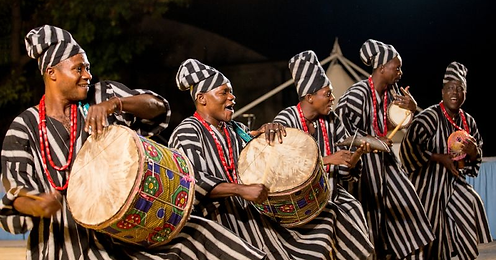


Nigeria is one of the most culturally rich and diverse countries in Africa. With over hundred ethnic groups and languages, its traditional music reflects the histories, beliefs, and everyday lives of its people. Music in Nigeria is not just for entertainment. It is part of how people tell stories, pass on knowledge, celebrate important events, and maintain their connection to the community.
Among the largest and most well-known cultural groups are the Yoruba, Igbo, and Hausa. Each of these groups has its own music styles, instruments, and rhythms that have been developed over many generations.
In Yoruba communities, drumming is especially important. The talking drum, known as dùndún, can imitate the tones of spoken Yoruba, allowing drummers to “speak” through their music. These drums are often used in festivals, spiritual ceremonies, and social gatherings. Praise singing and chants are also key parts of Yoruba music.
Igbo music features instruments like the udu (a clay pot drum), ogene (metal gong), and ọjà (flute). These are used in dances, festivals, and rituals that mark different stages of life, such as births, marriages, and funerals. The music is closely tied to storytelling and honoring the past.
In the north, Hausa music includes both folk and ceremonial traditions. Palace musicians often use long trumpets, fiddles, and drums in performances for emirs and important guests. In rural areas, music is part of agricultural festivals, Islamic celebrations, and social events.
Across Nigeria, traditional music is deeply rooted in community life. It often involves call-and-response singing, drumming, dancing, and the use of local languages. While modern styles like Afrobeat and hip-hop have become popular, traditional music continues to be a vital way for people to connect with their heritage and express their identity.
Nigeria
(Brief Background & Overview)

Children's Songs in Yoruba
1.
L’Ábẹ́ Ìgí Orombó
lL’Ábẹ́ Ìgí Orombó is a cheerful Yoruba children’s song from Nigeria that means “Under the Orange Tree.” It’s a playful song about children gathering under an orange tree to play games, feel happy, and enjoy each other’s company. The repeated word "orombo" refers to the orange fruit.
The song is often sung with light movements or clapping and is perfect for group singing or play activities
Language: Yoruba
Videos:
Sources:
2.
Iwe Kiko
What is this song about?
“Iwe Kiko” is a folk song in the Yoruba language that talks about the value of both education and hard work. It says that learning without farming tools (a hoe and cutlass) isn’t complete, because farming is an important part of life. The song reminds us that everyone should work hard—because not working can lead to bad choices.
Sources:
Iwe Kiko Beth's Notes Songs & Resources
Videos:
Holiday Songs
Gbọ́ ohùn àwọn áńgẹ́lì tí ń kọrin
1.
Funga (Fanga) Alafia
Songs Needing Context
The song is sung in a spirit of greeting, unity, and goodwill. It’s commonly used in music and movement classes, sometimes alongside drumming or simple hand motions.
Though the exact origin is debated, it is widely used in multicultural music settings and is popular for its pentatonic melody.
Sources:
pancocojams: The Funga Alafia Song - Part 2 (Lyrics)
Source with Questions